Develop compute and control peripherals on one board
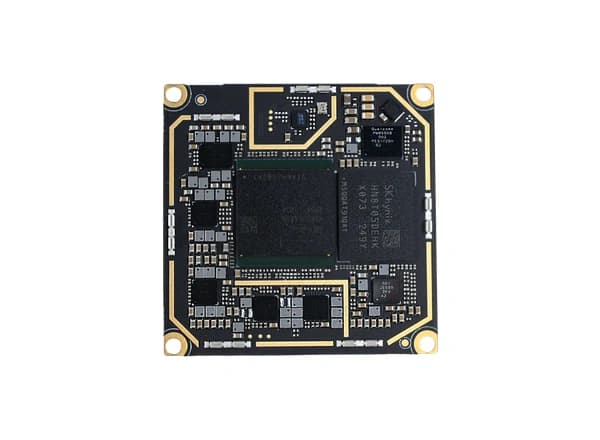
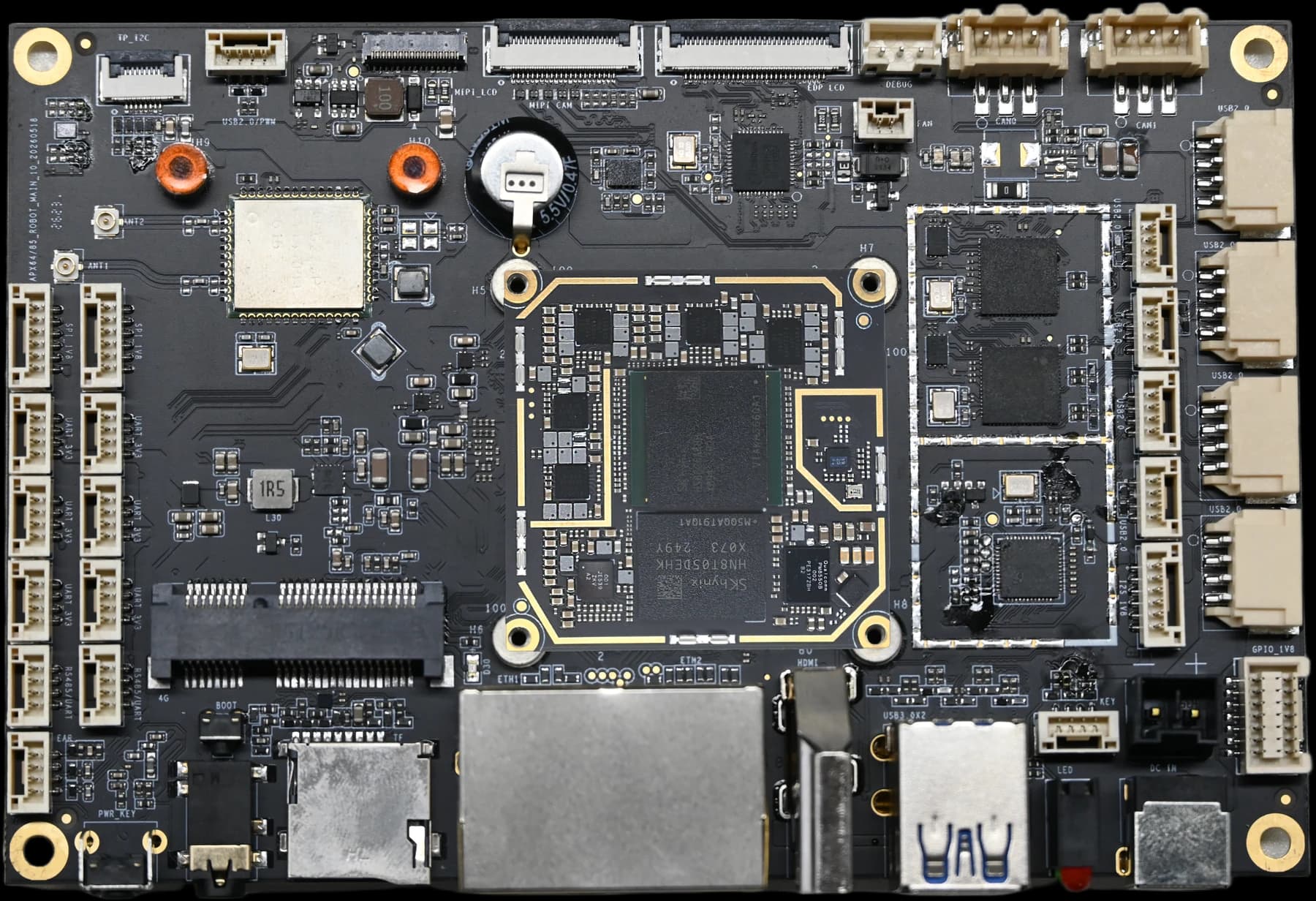
Rhino Core Q85 provides a six-core (AA) or eight-core (AC) Kryo CPU; the carrier connects controllers and industrial peripherals over CAN, RS485, UART and GPIO.

Industrial and robotics development board
Connect AI compute to equipment in the field
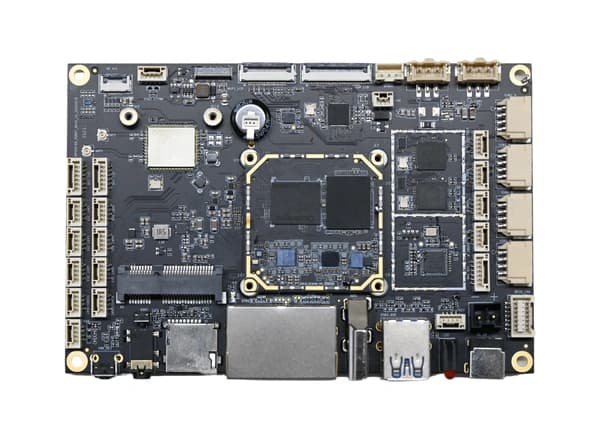
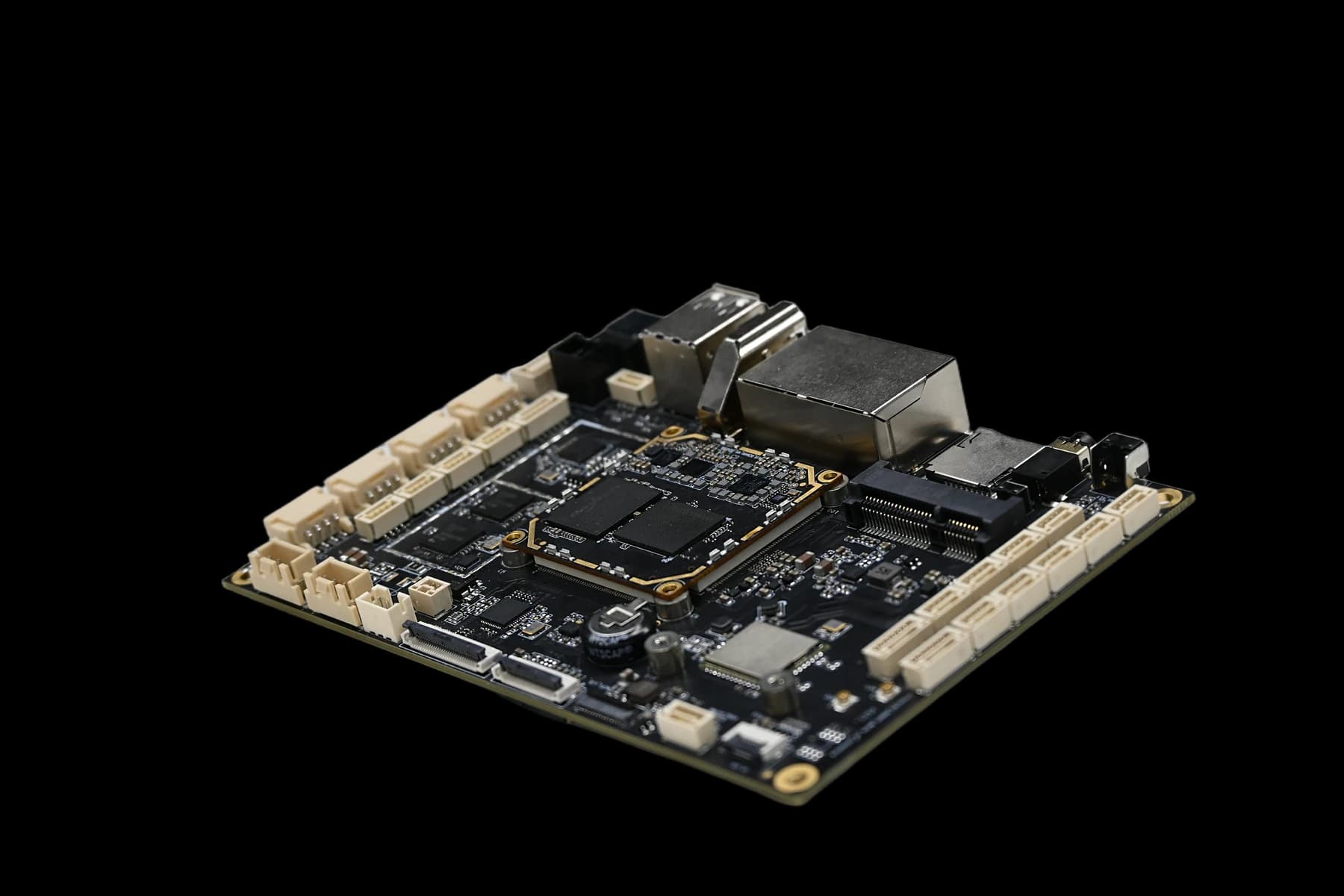
Combines a Rhino Core Q85 module with a companion carrier, offering QCS8550 six-core (AA) and eight-core (AC) configurations. Dual Gigabit Ethernet, dual CAN, dual RS485 and vision interfaces connect model evaluation with device integration.
48 TOPS
Maximum AI performance (INT8, dense)
Dual CAN + dual RS485
Industrial equipment connectivity
Dual Gigabit Ethernet
Wired Ethernet
135 × 90 mm
Carrier PCB dimensions
Match the compute platform to your device tasks, models, peripherals and product form factor.
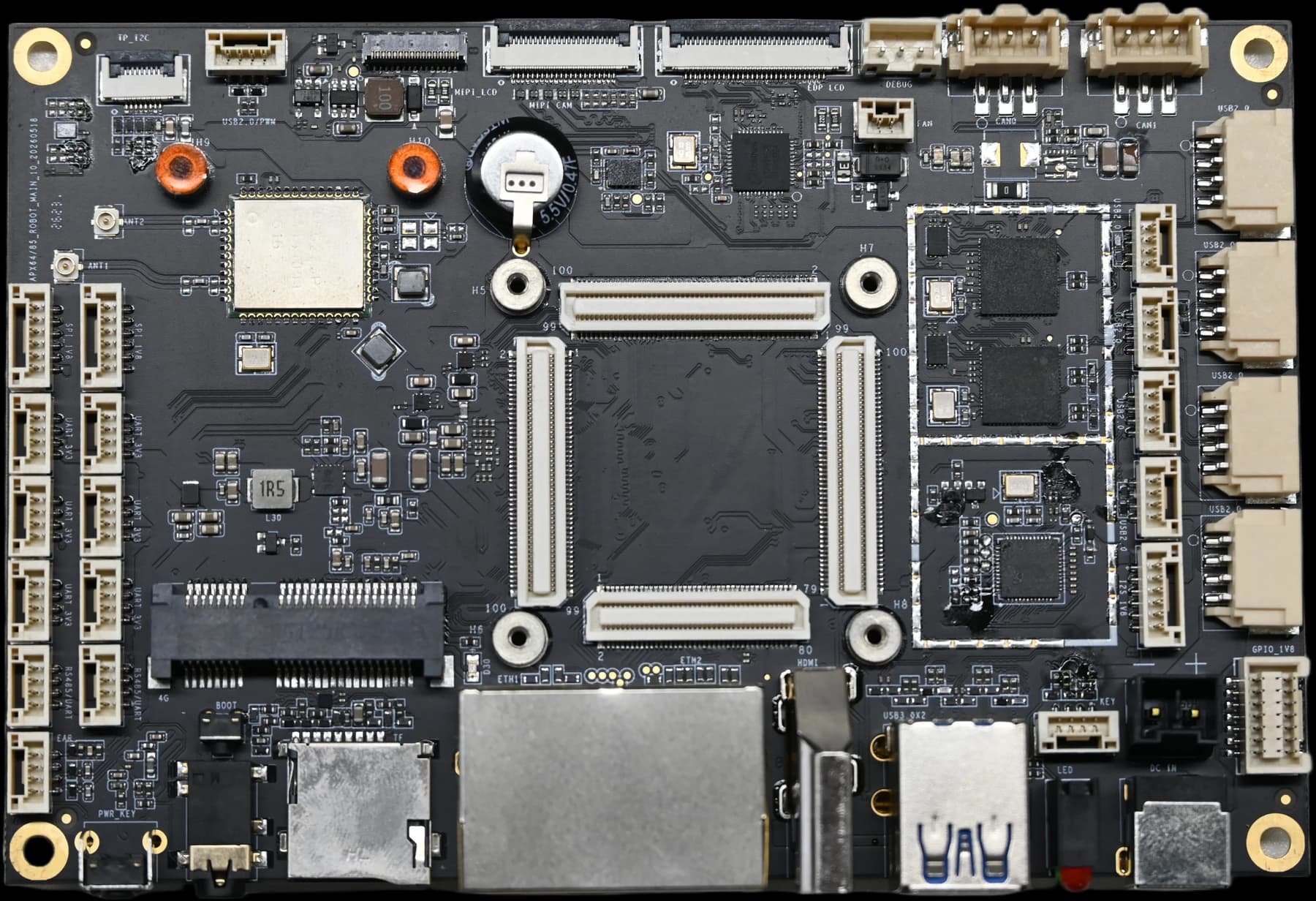
Rhino Core Q85 provides a six-core (AA) or eight-core (AC) Kryo CPU; the carrier connects controllers and industrial peripherals over CAN, RS485, UART and GPIO.
Two Gigabit RJ45 ports support equipment and upstream network integration; projects define network topology and application protocols.
Dual 4-lane MIPI CSI with HDMI, eDP, MIPI DSI and a dedicated touch interface supports vision and human-machine interaction projects.
Use an Ubuntu BSP matching the module and carrier configuration, together with AI tools for model adaptation, interface validation and application integration.
Locate connectors on the hardware and plan device connections around your peripherals.
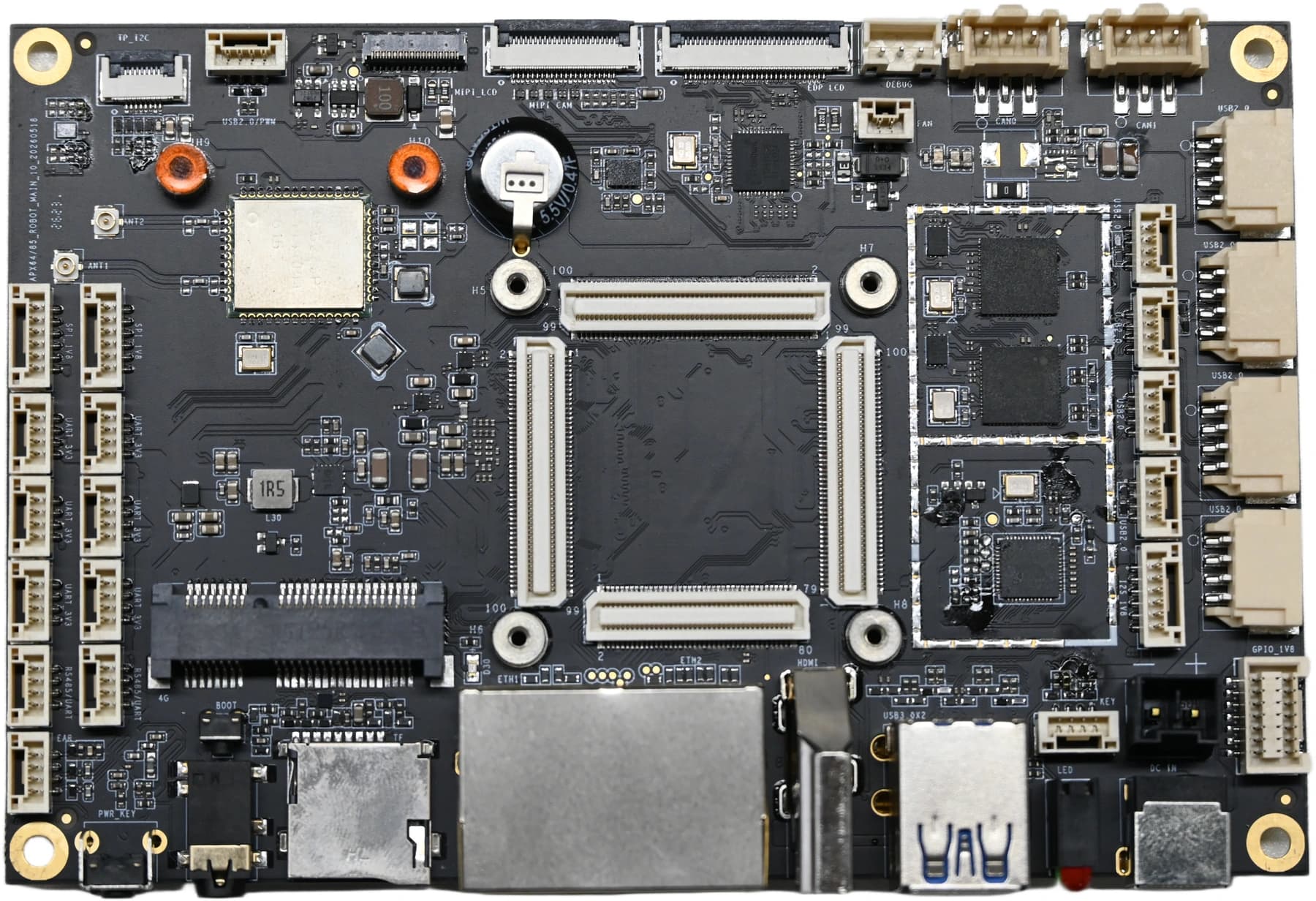
Select a number or interface name for connection details. Refer to the specification for pin assignments, voltage levels and multiplexing.
J1 DC jack and J2 power header: DC 10–24 V; recommended 12 V / 3 A.
Choose device workloads and integration paths based on platform capabilities and this model's interfaces.
Qualcomm Dragonwing QCS8550
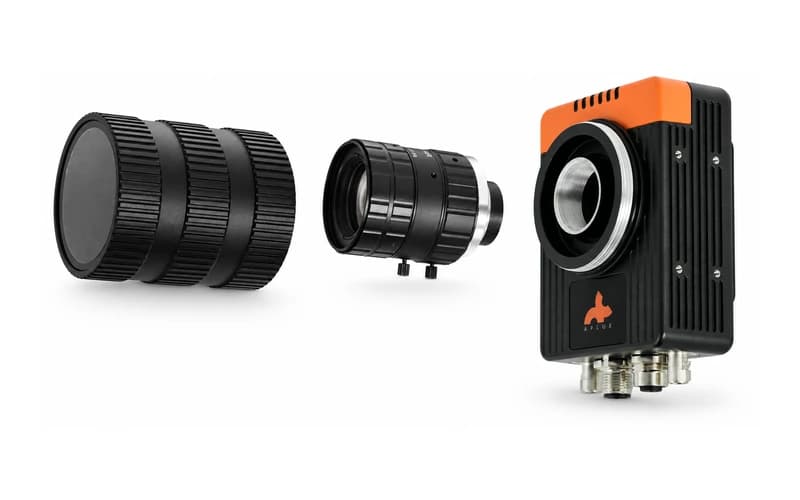
Combine cameras, ISP and local inference for more complex visual models and multitasking in intelligent vision devices.
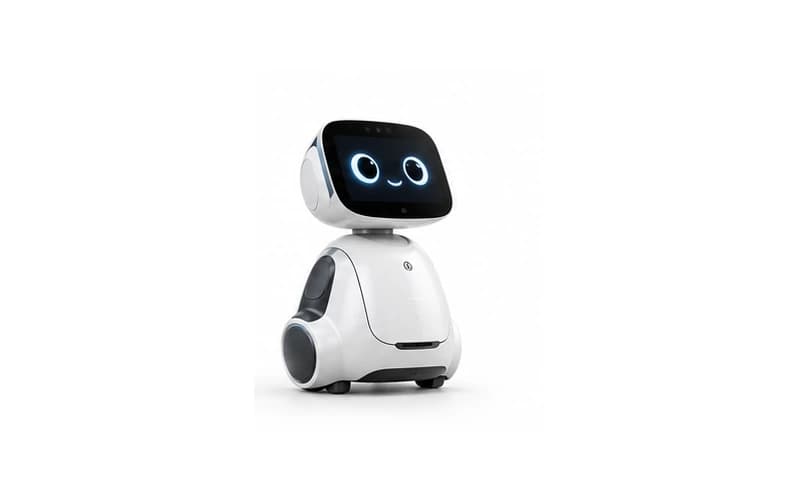
Connect voice, vision and local models to explore conversation, content understanding and task assistance.
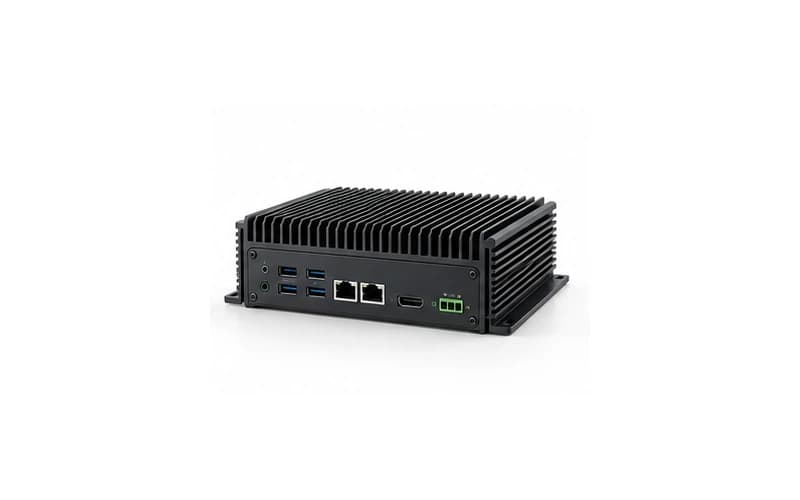
Connect cameras, networks and existing equipment to run recognition, analytics and intelligent applications in a compact compute device.
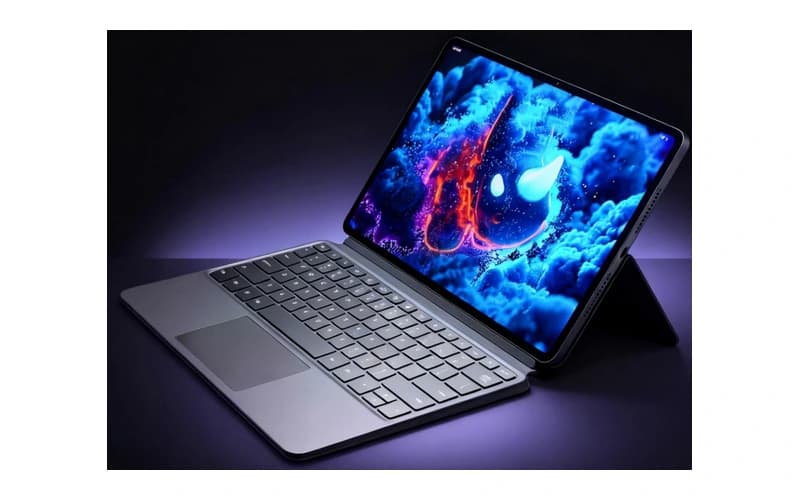
Combine content, models and application interfaces with local multimodal capabilities in display-equipped interactive products.
Device images illustrate application directions; peripherals, enclosure design and software require project-specific integration.
Configurations below follow the industrial and robotics development board documentation. Module capabilities and physically exposed board interfaces are distinguished.
| Assembly | Rhino Core Q85 + A8550PZ1-COM6490 carrier board |
|---|---|
| Compute platform | Qualcomm Dragonwing QCS8550 |
| Process | 4 nm |
| CPU | Qualcomm Kryo, six-core (AA) / eight-core (AC), up to 3.2 GHz; according to the order configuration |
| NPU | Qualcomm Hexagon |
| AI performance (INT8, dense) | Up to 48 TOPS(INT8, dense) |
| AI performance (FP16) | Up to 12 TOPS(FP16) |
| GPU | Qualcomm Adreno 740,680 MHz |
| Memory | 12 GB / 16 GB LPDDR5X, depending on model |
| Storage | 128 GB UFS |
| Camera | 2 × 4-lane MIPI CSI, 22-pin FPC, up to 2.5 Gbps/lane |
|---|---|
| HDMI | Standard Type-A, up to 4K@60Hz output |
| Display expansion | 30-pin eDP + 31-pin 4-lane MIPI DSI |
| Touch | TP (Touch Panel): 8-pin FPC, I²C, 1.8 V signals |
| Video decoding | Platform maximum 8K@60fps / 4K@240fps |
| Video encoding | Platform maximum 8K@30fps / 4K@120fps |
| USB-A | 2 × USB 3.0 Host sharing 5 Gbps upstream bandwidth |
|---|---|
| Internal USB | 8 × USB 2.0 Host |
| USB-C | USB 2.0 OTG for communication and supported flashing procedures |
| Ethernet | 2 × 10/100/1000 Mbps RJ45 |
| Wireless | AP6275P;Wi-Fi 6 + Bluetooth 5.3 |
| CAN | 2 × CAN supporting CAN 2.0B / CAN FD |
| RS485 | 2 channels with onboard 120Ω termination resistors |
| UART | 6 × 3.3 V TTL UART + dedicated debug port |
| GPIO | J36: 10 × 1.8 V GPIO; J53: PM8550 GPIO / PWM expansion, configured through the BSP |
| Expansion | USB 4G module interface in a Mini-PCIe form factor; PCIe SSDs are not supported |
| Operating system | Ubuntu 22.04 LTS with companion BSP |
|---|---|
| Power | DC 10–24 V; recommended 12 V / 3 A, through the DC jack or power connector |
| Carrier PCB | 135 × 90 mm, ±0.5 mm; board thickness 1.6 mm ±10% |
| Module dimensions | 40 × 40 mm, BTB connection |
| Assembly height | Confirm against the module, heatsink, connectors and delivered assembly drawing |
| Operating temperature | -20 °C~+50 °C |
| Fan | 5 V output, up to 1 A |
AI figures are platform-rated peaks. Dense, sparse and FP16 figures are listed separately; actual performance depends on the model, precision, software and cooling. Input power ratings do not represent total board consumption. Accessories and system images depend on the delivered configuration.
Six-core (AA) and eight-core (AC) variants depend on the order configuration. The system image must match the specific variant.
Download Chinese and English product briefs and specifications for product configuration, interface definitions and device integration requirements.
Product overview, key capabilities and application directions.
PDF · ChineseDownload Chinese briefProduct overview, key capabilities and application directions.
PDF · EnglishDownload English briefInterface definitions, power requirements and mechanical dimensions.
PDF · ChineseDownload specificationSystem images, firmware, development guides and reference designs.
Share your model, peripheral, mechanical and system requirements to define the product and delivery configuration together.