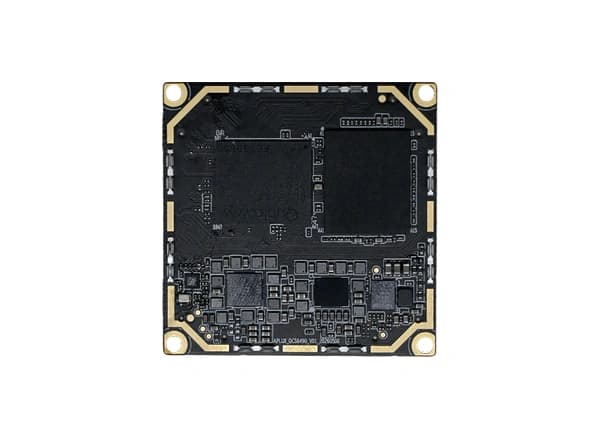
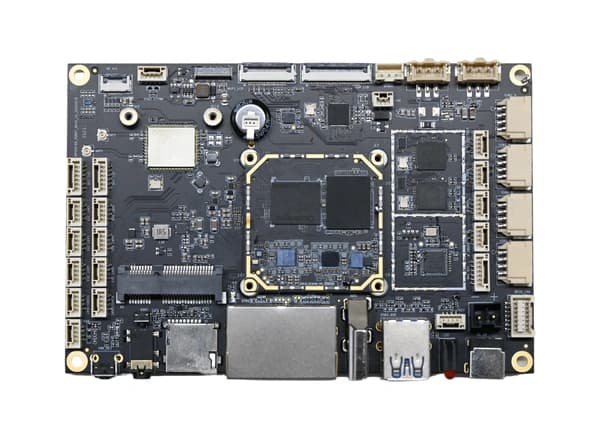
A fusion OS connecting applications and devices
The product brief specifies AidLux (Android 14 + Ubuntu 22.04), combining the mobile app ecosystem with Linux development tools.

Classic development board
Run vision and interaction locally on your device
A QCS6490 edge AI development platform with Android and Ubuntu environments, camera input, dual Ethernet and multiple USB ports for interactive terminals and edge vision prototyping.
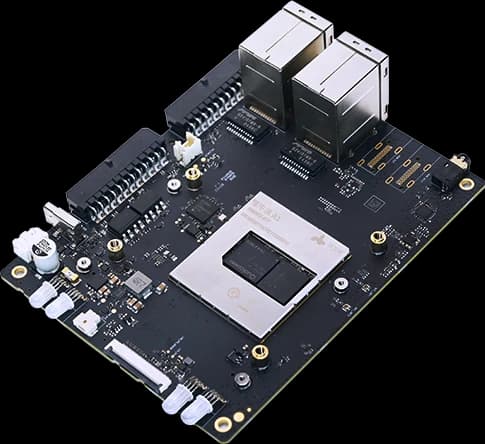
12 TOPS
Maximum AI performance (INT8, dense)
8 GB + 128 GB
LPDDR4X / UFS 3.1
2.7 GHz
Maximum octa-core CPU frequency
Dual Ethernet
2.5GbE + 1GbE
Match the compute platform to your device tasks, models, peripherals and product form factor.
The product brief specifies AidLux (Android 14 + Ubuntu 22.04), combining the mobile app ecosystem with Linux development tools.
Four USB-A 3.0 ports, USB-C with DP 1.4 and dual Ethernet connect cameras, displays and network devices.
The QCS6490 CPU, GPU and AI engine run adapted object detection and visual interaction workloads on the device.
Integrate capture, inference and the user interface around real workloads, then assess system cooling, peripherals and software configuration.
Locate connectors on the hardware and plan device connections around your peripherals.
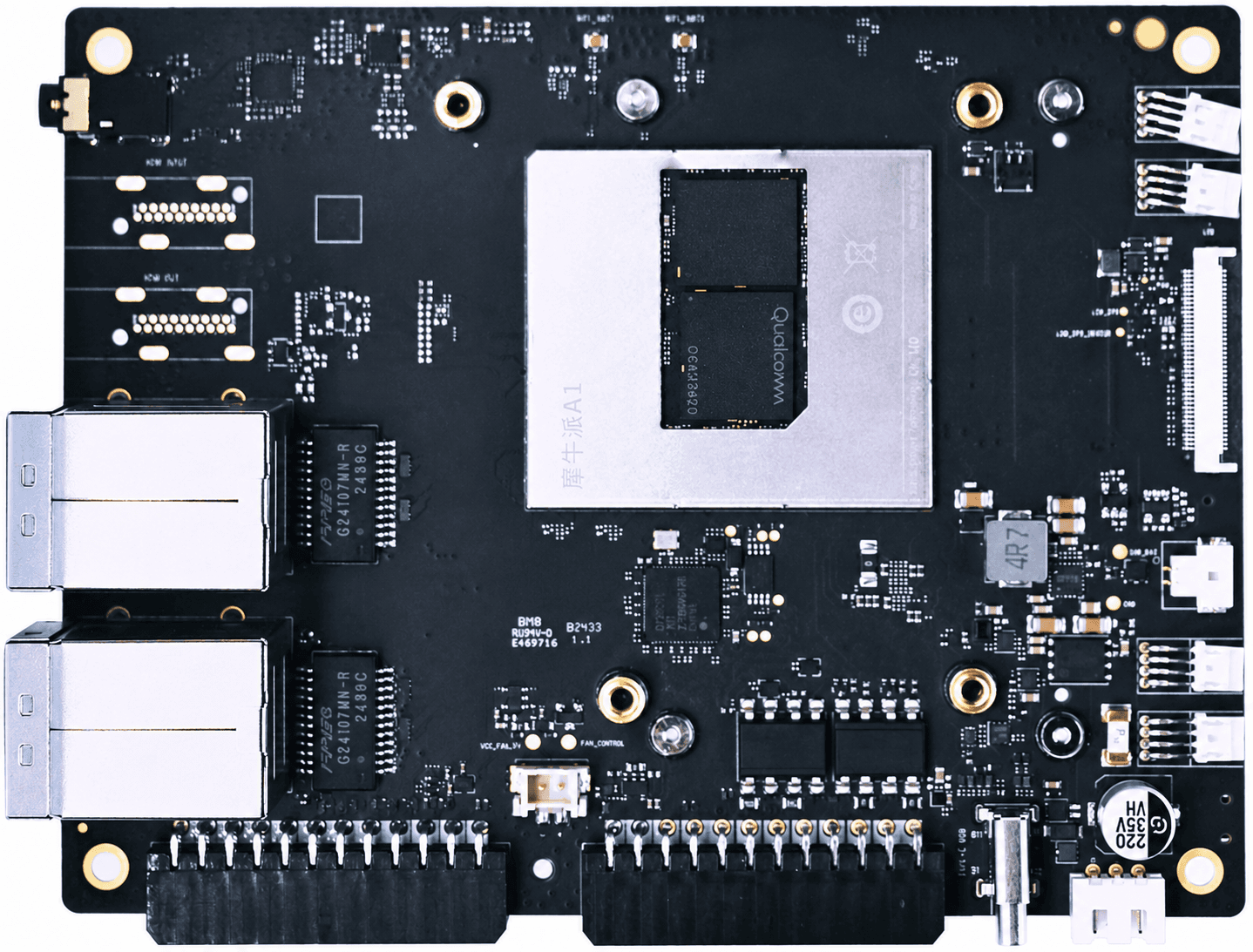
Select a number or interface name for connection details. Refer to the specification for pin assignments, voltage levels and multiplexing.
DC 12 V or 24 V; use the supplied power adapter cable. A power supply rated at least 36 W is recommended.
Choose device workloads and integration paths based on platform capabilities and this model's interfaces.
Qualcomm Dragonwing QCS6490
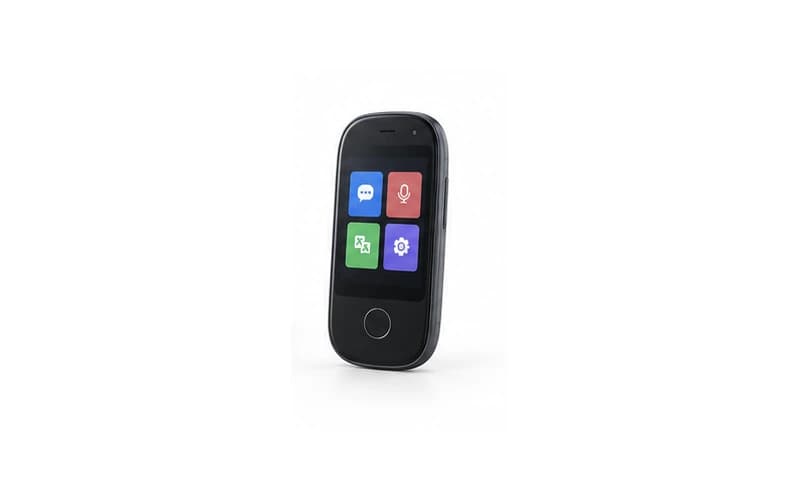
Combine touch interaction, image capture and local recognition in portable terminals for inspection, warehousing and field operations.
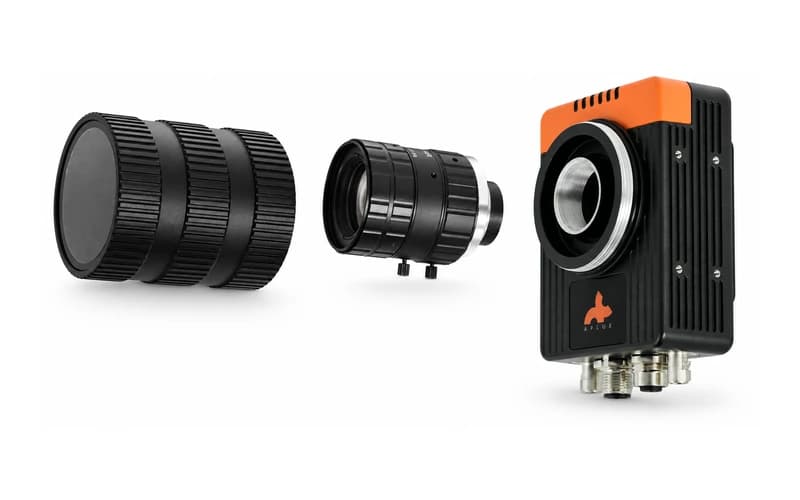
Integrate capture, recognition and result output on the device for detection, counting and status recognition tasks.
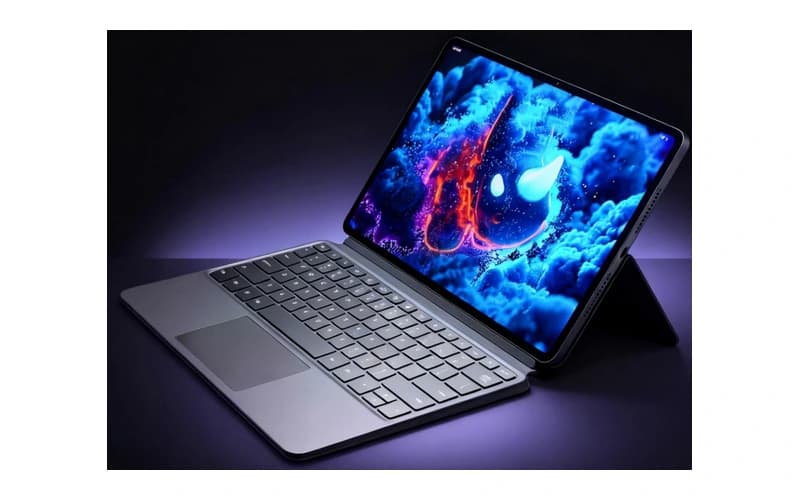
Connect displays, touch input, cameras and business systems to support industry user interfaces and local intelligent interaction.
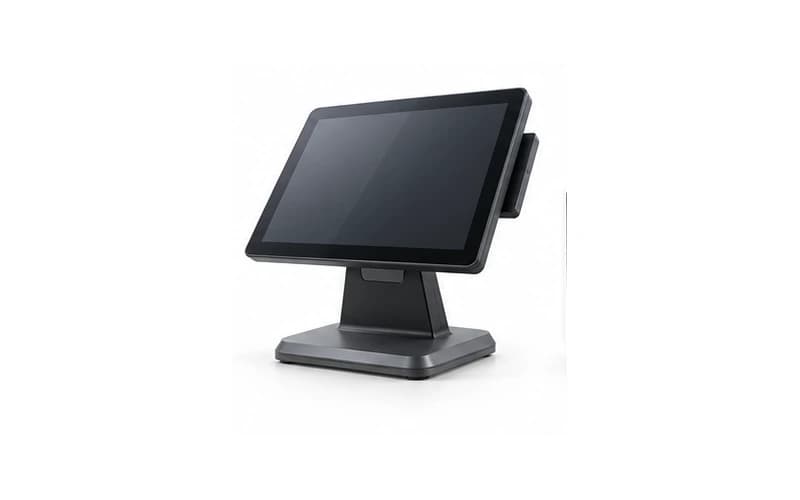
Combine scanning, displays and networking for checkout, self-service and in-store information terminals.
Device images illustrate application directions; peripherals, enclosure design and software require project-specific integration.
Configurations below follow the classic development board documentation. Module capabilities and interfaces physically exposed on the complete board are distinguished.
| Compute platform | Qualcomm Dragonwing QCS6490 |
|---|---|
| Process | 6 nm |
| CPU | Octa-core Qualcomm Kryo 670, up to 2.7 GHz |
| NPU | Qualcomm Hexagon 770 |
| AI performance (INT8, dense) | Up to 12 TOPS(INT8, dense) |
| GPU | Qualcomm Adreno 643, up to 812 MHz |
| Memory | 8 GB LPDDR4X |
| Storage | 128 GB UFS 3.1 |
| Video decoding | Platform maximum 4K@60fps, H.264 / H.265 |
|---|---|
| Video encoding | Platform maximum 4K@30fps, H.264 / H.265 |
| Cameras | 1 D-PHY MIPI CSI channel, 22-pin FPC; supported IMX577 (12 MP). C-PHY and stereo cameras are listed as NA in the documentation. |
| Display expansion | 1 MIPI DSI LCD; USB-C supports DP 1.4. Confirm display modes for the supplied system. |
| USB | 4 × USB-A 3.0 + 1 × USB-C 3.0 |
|---|---|
| Ethernet | 1 × 2.5GbE RJ45 + 1 × 1GbE RJ45 |
| Wireless | Wi-Fi 802.11ax,2.4/5 GHz,2 × 2 MIMO;Bluetooth 5.2 |
| Audio | 1 × 3.5 mm four-pole headset jack with microphone; 1 × 1.65 W speaker output through the expansion header |
| Industrial expansion | 48-pin: 2 CAN, 2 RS232, 1 RS485, 2 opto-isolated inputs + 2 opto-isolated outputs |
| General-purpose expansion | Same 48-pin group: 5 GPIO, 1 application UART, 1 debug UART, 1 SPI and 1 I²S; 3.3 V TTL signals |
| Removable storage | Rear Micro SD / TF slot |
| Operating System | AidLux (Android 14 + Ubuntu 22.04) or native Ubuntu 24.04, depending on the delivered image |
|---|---|
| Power | DC 12 V or 24 V; supplied power adapter cable. Recommended power supply: at least 36 W |
| Operating temperature | -20 °C~+50 °C |
| Dimensions | 100 × 130 × 39.25 mm |
| RTC | Dedicated RTC backup battery connector; documentation recommends CR2032 (225 mAh). Distinguish it from the Sub battery connection. |
| Fan | 2-pin: 5 V output and FAN_CONTROL; follow the dedicated pin assignment |
AI figures are platform-rated peaks. Dense, sparse and FP16 figures are listed separately; actual performance depends on the model, precision, software and cooling. Input power ratings do not represent total board consumption. Accessories and system images depend on the delivered configuration.
Download Chinese and English product briefs for configurations and application directions. Obtain detailed specifications for carrier board and device integration.
System images, firmware, development guides and reference designs.
Share your model, peripheral, mechanical and system requirements to define the product and delivery configuration together.