Application computing and a real-time subsystem
Octa-core Kryo Gen 6 and quad-core Cortex-R52 provide heterogeneous resources for model inference, business applications and real-time workloads.

High-compute industrial intelligent module
A powerful core for local data and real-time tasks
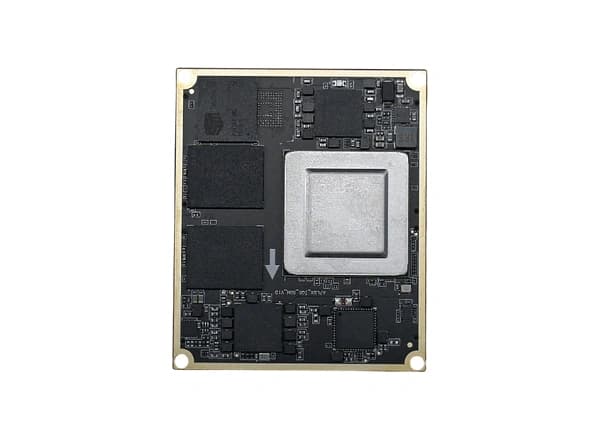
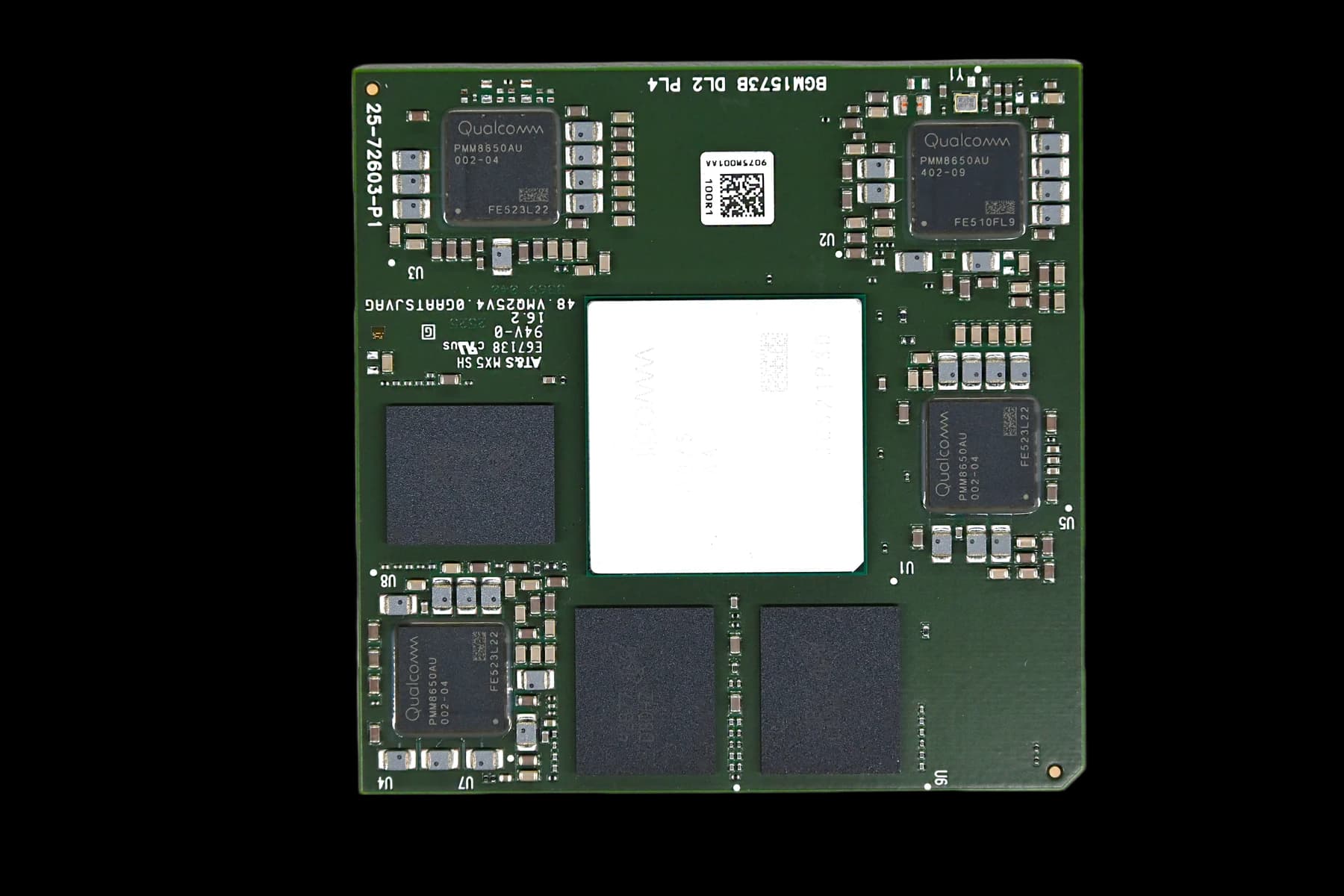
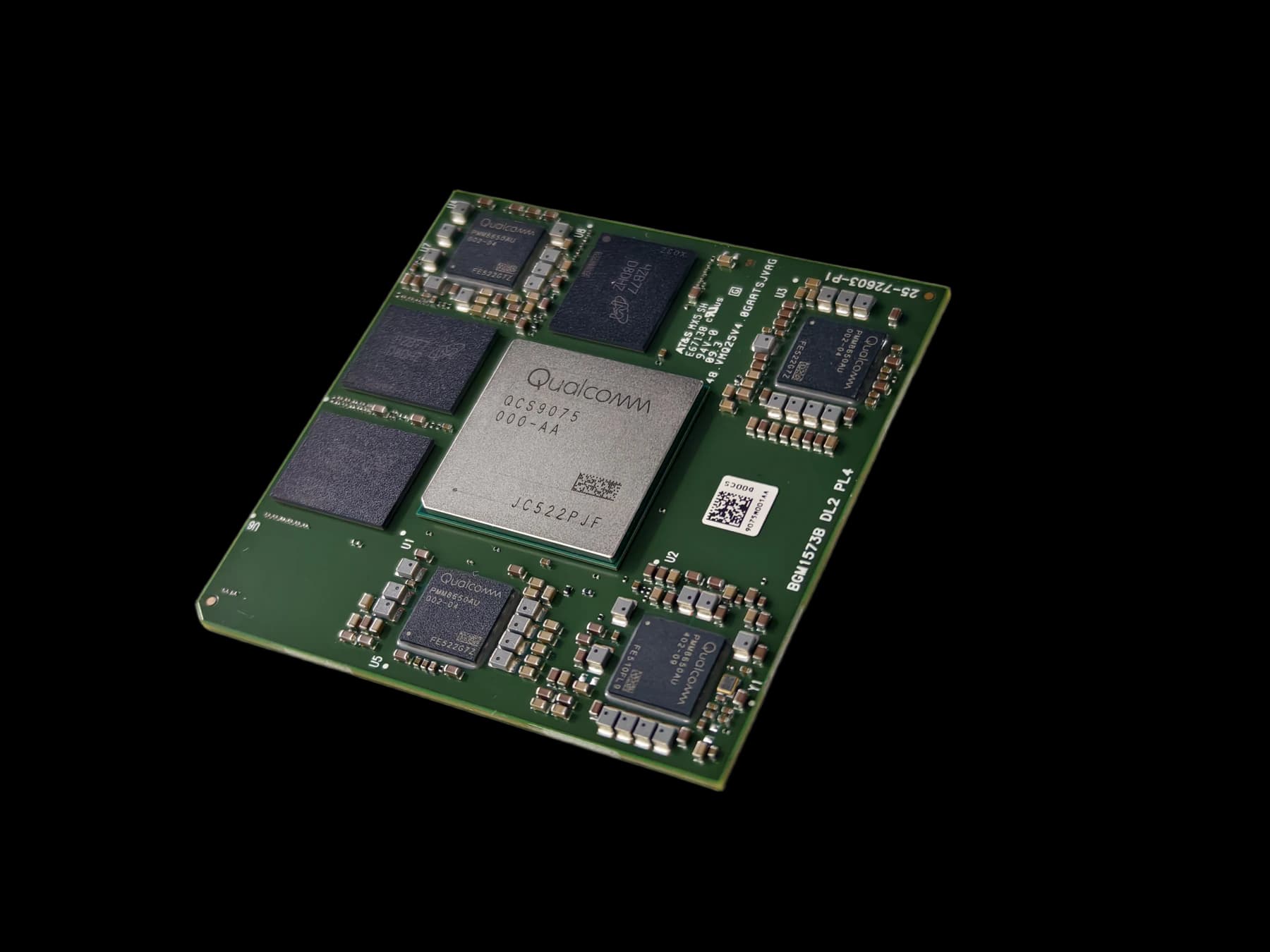
A Dragonwing IQ-9075 intelligent module with an octa-core application processor, quad-core real-time subsystem and up to 100 TOPS (INT8, dense), providing a core platform for local AI, industrial terminals and robotics projects.
100 TOPS
Maximum AI performance (INT8, dense)
36 GB
Standard LPDDR5 configuration
Quad-core R52
Real-time subsystem
65 × 65 mm
Package dimensions from the product brief
Match the compute platform to your device tasks, models, peripherals and product form factor.
Octa-core Kryo Gen 6 and quad-core Cortex-R52 provide heterogeneous resources for model inference, business applications and real-time workloads.
100 TOPS of dense compute and 36 GB LPDDR5 provide a basis for local model deployment. Assess model size against quantization, context length and runtime environment.
The platform provides CSI, PCIe Gen4, USB and display resources; confirm routing and electrical definitions against the specific module design documentation.
Validate storage, networking and local AI on a custom carrier. Obtain module pin assignments, power sequencing and electrical documentation before production design.
Choose device workloads and integration paths based on platform capabilities and this model's interfaces.
Qualcomm Dragonwing IQ-9075
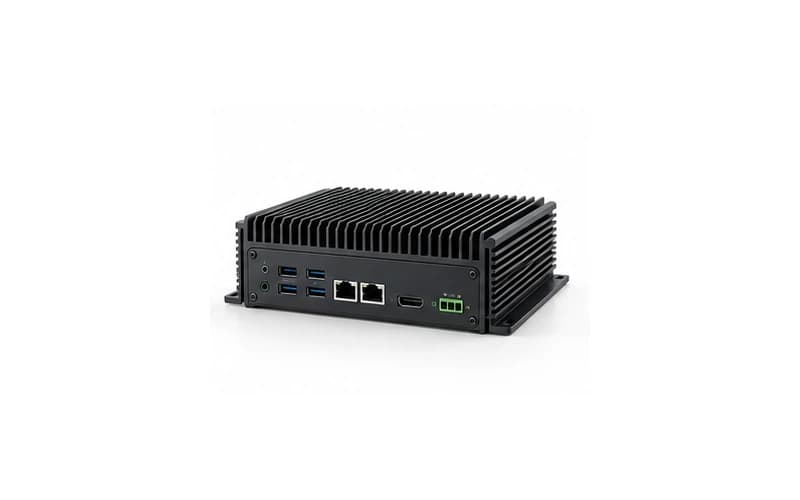
Combine complex models, device data processing and companion industrial interfaces to integrate local compute into field control systems.
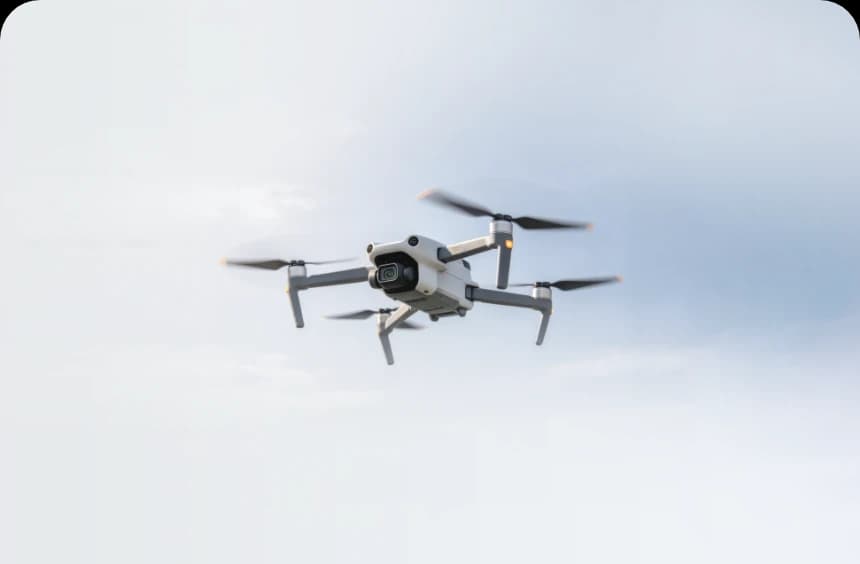
Handle airborne perception and higher-level task inference, connecting to an external flight controller through a compatible carrier and communication link.
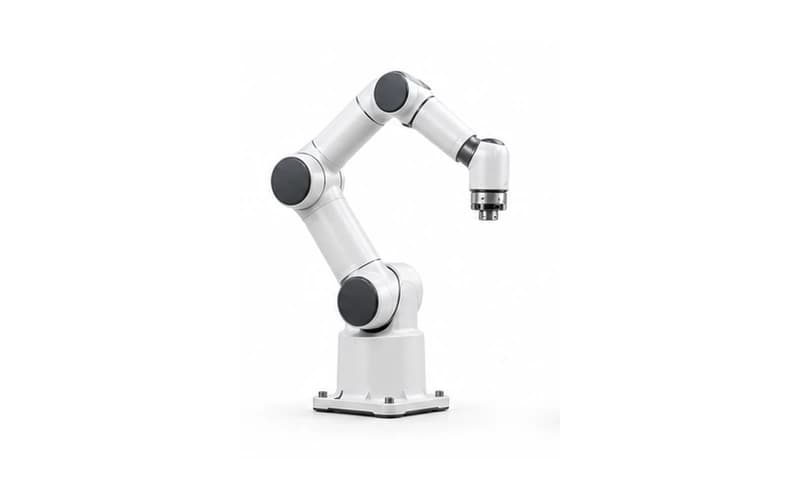
Provide local compute for robot perception, multimodal understanding and task planning; a companion control system coordinates motion control.
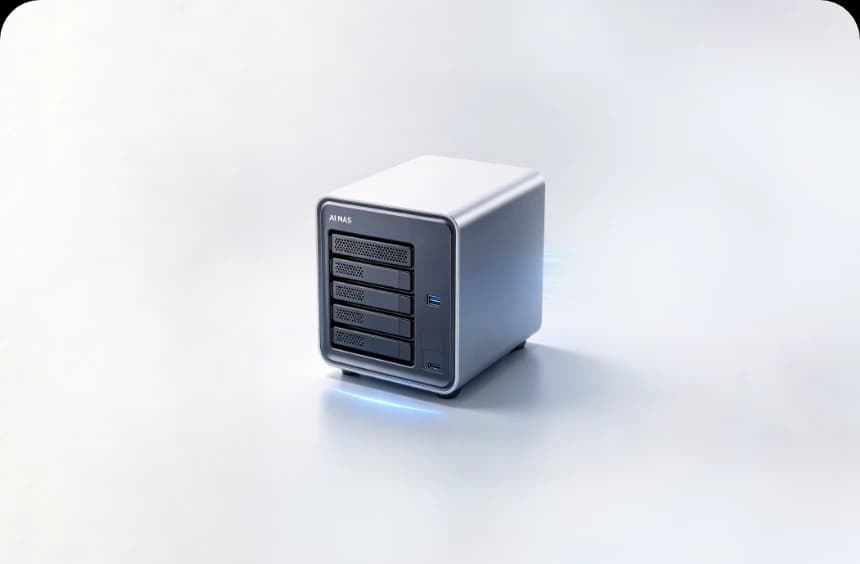
Connect storage media, network access and local models to make files, photos and knowledge easier to retrieve and use.
Device images illustrate application directions; peripherals, enclosure and software require project-specific integration. Modules require a carrier; platform resources are not equivalent to physically exposed device interfaces.
Configurations below follow the high-compute industrial intelligent module documentation. Module capabilities and physically exposed device interfaces are distinguished.
| Compute platform | Qualcomm Dragonwing IQ-9075 |
|---|---|
| Chip identifier | QCS9075M |
| Process | 4 nm |
| CPU | Octa-core Qualcomm Kryo Gen 6, up to 2.36 GHz |
| NPU | Qualcomm Hexagon |
| AI performance (INT8, dense) | Up to 100 TOPS(INT8, dense) |
| GPU | Qualcomm Adreno 663,800 MHz |
| Real-time subsystem | 4 × Cortex-R52, platform maximum 1.85 GHz |
| Memory | 36 GB LPDDR5 (standard configuration in the current product brief) |
| Storage | UFS 3.1 / eMMC; capacity configured for the project |
| Camera resources | 4 × 4-lane MIPI CSI; routing follows the separate module documentation |
|---|---|
| Display resources | MIPI DSI / eDP / DP; validate exposure and concurrency against the implementation |
| Video decoding | Platform maximum 4 × 4K60 / 4K240 |
| Video encoding | Platform maximum 2 × 4K60 / 4K120 |
| PCIe | 1 × Gen4 x4 + 1 × Gen4 x2 |
|---|---|
| USB | 2 × USB 3.1 Gen2 + 1 × USB 2.0 |
| Ethernet | Platform SGMII resources; carrier implements physical Ethernet ports |
| Control resources | CAN FD, UART, I²C, SPI, I²S / PCM / TDM and GPIO; routing follows separate documentation |
| Wireless | Wi-Fi / Bluetooth are optional, not onboard by default on every module |
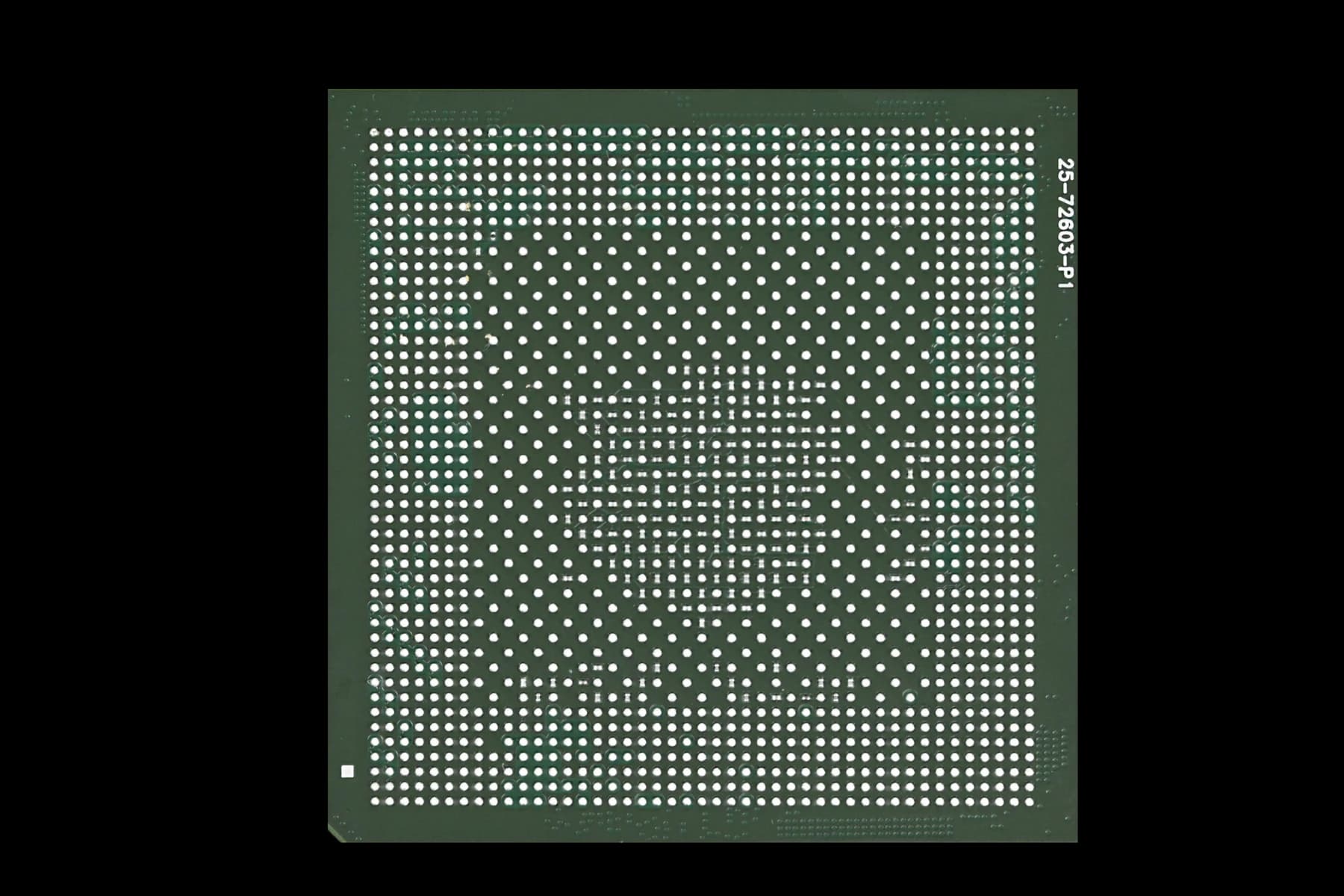
| Package | 65 × 65 mm, 1573-ball BGA |
|---|---|
| Power input | DC 3.3 V; confirm the separate electrical specification for the project |
| Operating temperature | -40 °C to +85 °C; production conditions follow separate specifications and testing |
| System support | Linux / Ubuntu according to the project BSP |
| Design documentation | Obtain companion module pin assignments and electrical specifications before carrier design |
AI figures are platform-rated peaks. Dense, sparse and FP16 figures are listed separately; actual performance depends on the model, precision, software and cooling. Input power ratings do not represent total board consumption. Accessories and system images depend on the delivered configuration.
Product briefs are currently available; confirm separate module pin, electrical and mechanical requirements before carrier design.
Download Chinese and English product briefs for configurations and application directions. Obtain detailed specifications for carrier board and device integration.
Product overview, key capabilities and application directions.
PDF · ChineseDownload Chinese briefProduct overview, key capabilities and application directions.
PDF · EnglishDownload English briefShare your model, peripheral, mechanical and system requirements to define the product and delivery configuration together.