Dedicated memory and system storage
Standard 12 GB LPDDR5X and 128 GB UFS 3.1, with optional 16 / 24 GB memory. Confirm configurations for model deployment requirements.

Edge AI accelerator card
Add local AI compute to an existing host
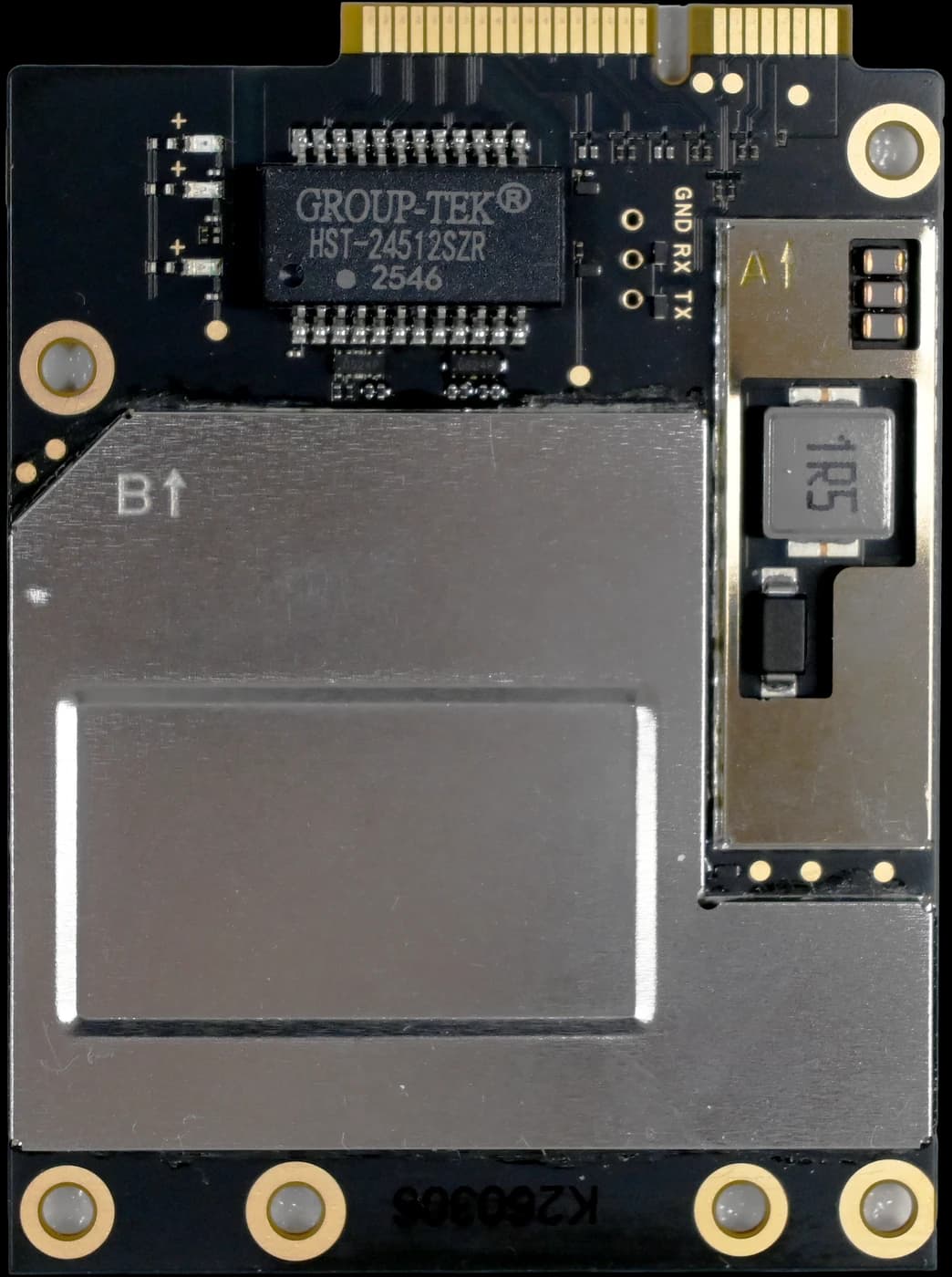
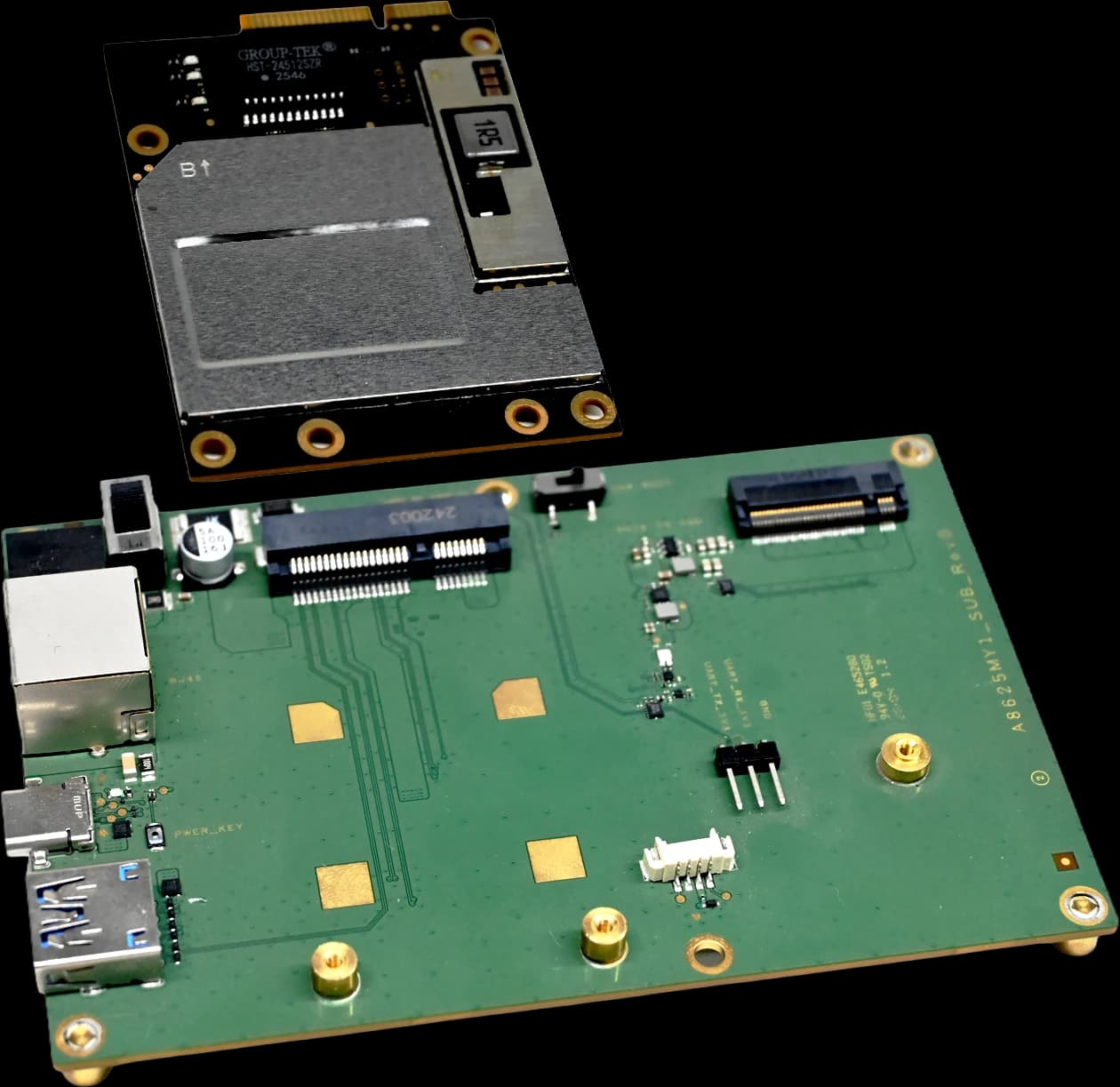
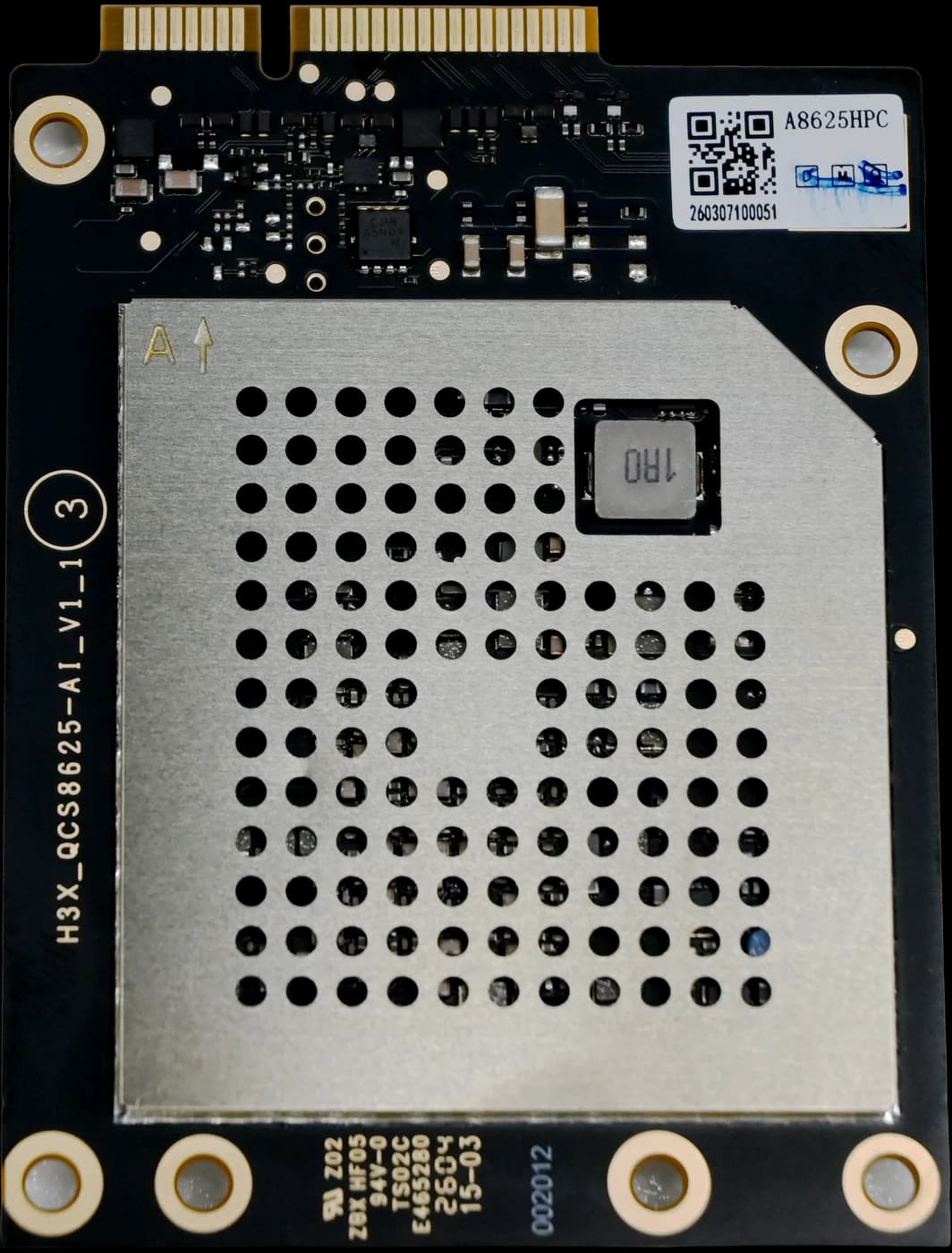
A QCS8625 accelerator card integrating LPDDR5X, UFS and an Ethernet controller. A dedicated adapter carrier and companion software add local model inference and video analytics to the host.
60 TOPS
Maximum AI performance (INT8, dense)
12 GB + 128 GB
Standard LPDDR5X / UFS 3.1
47 × 64 mm
Card outline
PCIe Gen4 x2
Host interconnect resources
Match the compute platform to your device tasks, models, peripherals and product form factor.
Standard 12 GB LPDDR5X and 128 GB UFS 3.1, with optional 16 / 24 GB memory. Confirm configurations for model deployment requirements.
PCIe, Ethernet and USB, together with an adapter carrier, drivers and communication services, connect the host to the on-card runtime.
CPU, Adreno 750, NPU and video engines support adapted vision, language and multimodal applications.
The 52-pin edge connector uses this product's own definition. Verify power, signals and cooling and use the adapter board for system integration.
Evaluate AI compute expansion against host links and connection definitions.
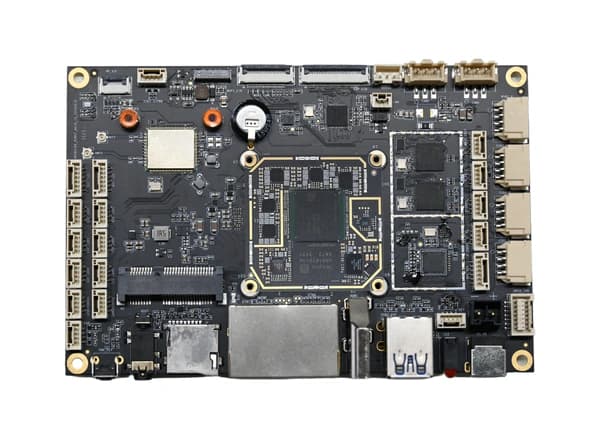
Functional overview; refer to the product specification for connector positions and electrical definitions.
1 × PCIe 4.0 x2 through the dedicated edge connector
Choose device workloads and integration paths based on platform capabilities and this model's interfaces.
Qualcomm QCS8625
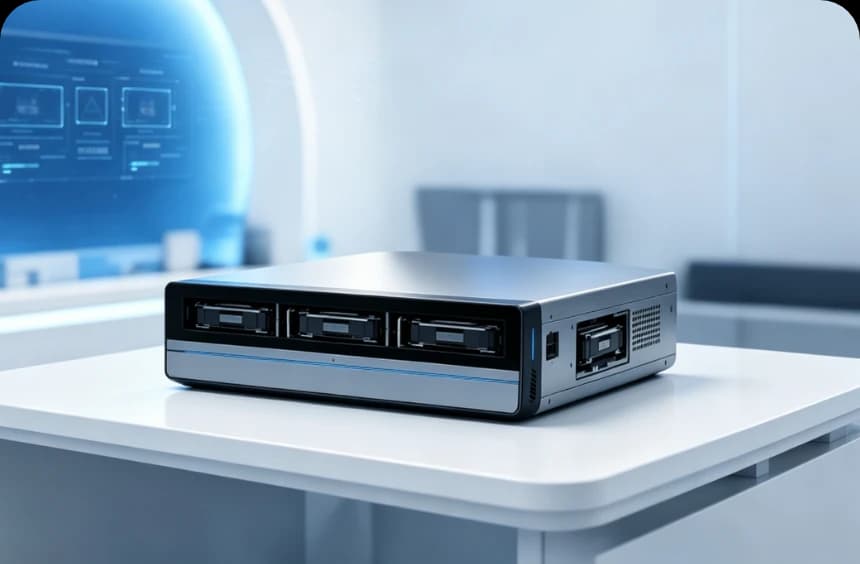
Combine multiple network video inputs, storage and recognition into a locally running intelligent video pipeline.
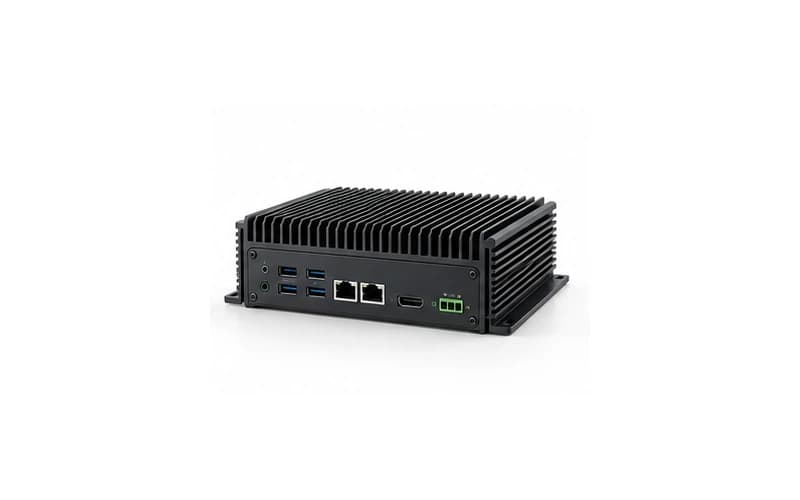
Extend existing video systems and hosts, connecting AI analytical results to alerts, retrieval and business applications.
Device images illustrate application directions; peripherals, enclosure design and software require project-specific integration.
Configurations below follow the edge AI accelerator card documentation. Module capabilities and physically exposed device interfaces are distinguished.
| Compute platform | Qualcomm QCS8625 |
|---|---|
| Process | 4 nm |
| CPU | Octa-core Qualcomm Kryo, up to 3.4 GHz |
| NPU | Qualcomm Hexagon |
| AI performance (INT8, dense) | Up to 60 TOPS(INT8, dense) |
| AI performance (INT8, sparse) | Up to 120 TOPS(INT8, sparse) |
| AI performance (FP16) | Up to 15 TOPS(FP16) |
| GPU | Qualcomm Adreno |
| Standard memory | 12 GB LPDDR5X |
| Optional memory | 16 GB / 24 GB LPDDR5X, according to the order configuration |
| Storage | 128 GB UFS 3.1 |
| Video decoding | Platform maximum 4K240 / 8K60 |
|---|---|
| Video encoding | Platform maximum 4K120 / 8K30 |
| Model deployment | Evaluate LLM / VLM / VLA against memory, quantization, context length and the adapted implementation |
| Operating system | Linux Embedded with companion model tools and runtime libraries |
| PCIe | 1 × PCIe 4.0 x2 through the dedicated edge connector |
|---|---|
| Ethernet | Onboard RTL8125B-CG 2.5GbE controller; RJ45 is on the companion carrier |
| USB | 1 group of USB 3.1 + 1 group of USB 2.0 signals; carrier implements physical sockets |
| Debug UART | 1 group, 1.8 V TTL |
| I²C | 1 group, 1.8 V |
| Connection | 52-pin edge connector with dedicated pin / power definitions |
| Product code | A8625MY1 |
|---|---|
| Outline | 47 × 64 mm; PCB thickness 1.00 mm |
| Power | 12 V DC through VCC12 V_SYS on the edge connector |
| Power measurement scope | The documented typical 7 W inference figure covers only the NPU, not the complete card |
| Radiator | Optional fins and 5 V fan; account for total CPU / GPU / memory / network and other loads |
| Host software | Use matching versions of PCIe drivers, protocol services and model runtime libraries |
AI figures are platform-rated peaks. Dense, sparse and FP16 figures are listed separately; actual performance depends on the model, precision, software and cooling. Input power ratings do not represent total board consumption. Accessories and system images depend on the delivered configuration.
The dedicated 52-pin edge connector definition does not imply compatibility with arbitrary Mini-PCIe slots. Adapt the host data links and electrical connections accordingly.
60 TOPS refers to INT8 dense performance and 120 TOPS to INT8 sparse performance. Typical NPU inference power is not total card consumption.
Download Chinese and English product briefs and specifications for product configuration, interface definitions and device integration requirements.
Product overview, key capabilities and application directions.
PDF · ChineseDownload Chinese briefProduct overview, key capabilities and application directions.
PDF · EnglishDownload English briefInterface definitions, power requirements and mechanical dimensions.
PDF · ChineseDownload specificationSystem images, firmware, development guides and reference designs.
Share your model, peripheral, mechanical and system requirements to define the product and delivery configuration together.